
By Jennet Orayeva, RTDS Group
Europe’s ambition to claim global leadership in industrial decarbonisation has just taken a bold step forward with the recent announcement of the Clean Industrial Deal: A Joint Roadmap for Competitiveness and Decarbonisation. With this initiative, the European Commission (EC) is calling for nothing short of a revolution in industrial practices, one that is deeply intertwined with its economic future.
On February 26, 2025, Ursula von der Leyen, President of the EC, launched the ambitious action plan that calls for a significant increase in funding to decarbonise industries, boost innovation, and position Europe as a global leader in clean tech. Yet, turning this vision into reality requires a fundamental shift in how Europe invests in its industrial future.
“We want to invest more than ever in innovation! Innovation!” von der Leyen passionately declared at the unveiling of the Clean Industrial Deal, sending a clear signal to European industries: innovate or risk being left behind in the global race for clean technologies.
The stakes could not be higher. As energy-intensive sectors face a defining moment in Europe’s industrial future, the need for robust public-private partnerships to spur innovation has never been greater.
Europe’s Edge: From Industrial Innovation to Industrial Production
As von der Leyen proudly highlighted, “Europe is not only a continent of industrial innovation, but also a continent of industrial production”. Europe is home to 30% of the world’s leading companies in electrolyser technology, 20% in carbon capture and storage (CCUS), and 40% in wind and heat pump technologies. These numbers reflect Europe’s potential to outpace global competitors. Yet, despite these promising figures, many of Europe’s clean-tech innovators struggle to scale their solutions to meet industrial needs. To succeed, they need better access to capital and robust public funding. That’s why the Clean Industrial Deal came into existence, to strengthen European financial instruments to drive this transition.
How the Clean Industrial Deal Could Define the Future of EU Research and Innovation
Financing through EU funding mechanisms such as the Innovation Fund and the newly established Industrial Decarbonisation Bank are one of the core six business drivers laid out in the EC’s Clean Industrial Deal. These tools are designed to unlock substantial investments in clean manufacturing, decarbonisation technologies, and industrial innovation.
The Innovation Fund has proven invaluable in financing industrial decarbonisation and clean-tech manufacturing projects. Yet, despite its success, many promising projects are still rejected in each funding round. While the Innovation Fund focuses on scaling up and commercialising innovative low-carbon technologies, the Horizon Europe programme lays the crucial groundwork by funding early-stage research and innovation.
These synergies between EU research and innovation funding schemes are critical for Europe’s strategy to achieve industrial decarbonisation at scale. The new additional financing options available for Innovation Fund-selected projects now offer the potential to turn Horizon Europe-funded research into tangible, large-scale solutions. This creates a more direct path from lab-based breakthroughs to real-world industrial applications.
Bridging the Gap: From Lab to Market
As the EU works to mobilise significant investments for scaling up clean-tech manufacturing and industrial decarbonisation, organisations like the RTDS Group are helping research institutions and companies in bridging the gap between cutting-edge research and tangible market impact.
Active in 14 EU-funded research and innovation projects, RTDS is supporting research institutions and companies in diverse sectors, including agriculture, manufacturing, transportation, textiles, and chemicals. With a track record going back to the 6th EU Research Framework Programme (FP6), RTDS has successfully helped deliver nearly 40 EU research and innovation projects. Its expertise in project coordination, dissemination, exploitation, and communication (DEC), data management, innovation management, as well as IP managementof EU-funded research and innovation projects, are vital to successfully translate research outcomes into scalable, market-ready solutions.
Through these efforts, RTDS ensures that Europe’s Twin Transition — the harmonious balance of sustainability and technological advancement — becomes a reality, moving innovations from research labs to the market and contributing to the decarbonisation of Europe’s economy.
Under the Horizon Europe funding program, RTDS Group coordinates projects and leads essential workstreams focused on DEC, innovation management and the commercialization of a wide range of industrial innovation initiatives. In three projects in particular, RTDS Group’s involvement is helping drive major innovations and shaping the future of key industries across Europe in collaboration with top research institutions and industrial partners.
SUSHEAT: Decarbonizing European Industry with Waste and Renewable Energy for Heat Supply
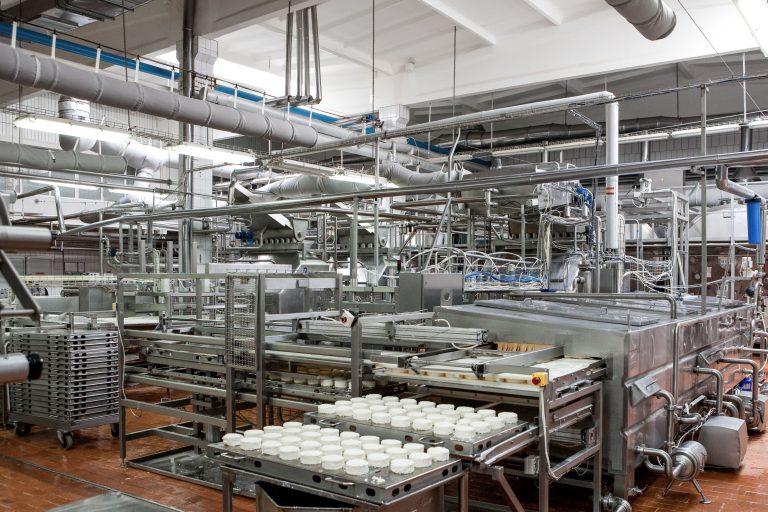
Decarbonizing industrial production is essential for meeting the European Union’s climate goals, which require a shift to renewable energy sources and a drastic reduction in energy consumption and CO2 emissions. The SUSHEAT project focuses on decarbonizing industrial heat supply by integrating waste and renewable energy sources, aligning closely with the European Clean Industrial Deal‘s objectives.
The Commission’s Action Plan on Affordable Energy, which aims to reduce energy costs for industries and accelerate the clean energy transition, is fully in line with SUSHEAT’s goals. By using waste and renewable energy to provide high-temperature heat, SUSHEAT helps reduce reliance on fossil fuels and improve energy efficiency, driving both decarbonization and cost savings. This initiative also contributes to the EU’s efforts to promote clean technologies in manufacturing and supports the upcoming Guidance on social leasing for zero-emission vehicles, heat pumps, and other clean products, as outlined in Article 7 of the Clean Industrial Deal. As the SUSHEAT project progresses, the Clean Industrial Deal provides vital support for making energy practices more affordable and sustainable, ultimately contributing to the EU’s climate targets and a competitive, cleaner industrial future.
RecAL: Transforming Aluminium Recycling to Strengthen Europe’s Critical Raw Materials Strategy
Circular raw materials are crucial for European industry. To secure access to these materials and reduce exposure to unreliable suppliers, the European Commission is building on its experience with the Critical Raw Materials Act, and by creating an EU Critical Raw Material Centre to collectively purchase raw materials at better prices and conditions – one of the key elements of the Clean Industrial Deal.
Aligned with this strategy, the RecAL project (Recycling Technologies for Circular Aluminium), is at the forefront of Europe’s efforts to secure a sustainable and circular future for critical raw materials. By focusing on the increased use of secondary resources, such as recycled aluminium, RecAL directly supports the Critical Materials Act (Article 8 of the Clean Industrial Deal), helping reduce Europe’s dependency on primary resources like bauxite and alumina. This shift not only enhances Europe’s self-sufficiency, but also strengthens its resilience against supply chain disruptions – a growing concern for industries across the continent.
RecAL’s comprehensive approach is also in strong alignment with the upcoming Circular Economy Act, scheduled for launch in 2026 under the Clean Industrial Deal. With a vision to accelerate Europe’s circular transition, this forthcoming Act aims for 24% of materials to be circular by 2030, reducing global dependencies and ensuring the efficient use and reuse of scarce materials. The RecAL project is actively contributing to the EU’s goals as a partner of the European Aluminium Association, which represents the entire aluminium value chain in Europe.
Another unique digital tool the project is pioneering is the RecAL Hub, a digital marketplace designed to connect suppliers of aluminium scrap with buyers, facilitating the efficient tracking, transparent assessment, and recycling of materials to support Europe’s circular economy transition.
CELLFIL: Advancing Bio-based Materials for a Fossil-Free, Circular Textile Industry
The CELLFIL project, coordinated by RTDS, works on transforming the textile industry value chain by advancing and scaling up the production of bio-based Lyocell filaments made from circular materials such as wood, textile waste, citrus pulp, and other renewable sources. This initiative directly supports the goals of the Clean Industrial Deal by promoting circular, biodegradable fibers that reduce reliance on synthetic, fossil-based materials in textiles.
Aligned with the EU’s Circular Economy Act proposed for 2026, CELLFIL fosters industrial innovation, decarbonization, and increased competitiveness by developing sustainable, renewable textiles. By reducing Europe’s dependency on non-circular raw materials, the project helps position the continent as a leader in clean manufacturing, supporting the transition to a more circular, resilient, and decarbonized economy.
As part of the ECOSYSTEX community, CELLFIL also contributes to a larger collaboration within the textile industry, driving forward cutting-edge initiatives aimed at achieving biobased textile sustainability and circularity.
A key contribution to Europe’s industrial future
The SUSHEAT, RecAL, and CELLFIL initiatives, detailed in this article, not only align with the goals of the Clean Industrial Deal, but also contribute to Europe’s industrial future by promoting sustainable energy use, resource security, and eco-friendly manufacturing practices.
Explore more projects coordinated and supported by the RTDS Group across a wide range of industrial sectors, including agriculture (SAGROPIA, VIRTIGATION, BIOVEXO, UNTWIST, PLAMORF), environmental biotechnology (MIBIREM), agrochemicals (PHAntastic), construction (BIOBUILD), aerospace (CAELESTIS), biofuels (FUELGAE) and more.